
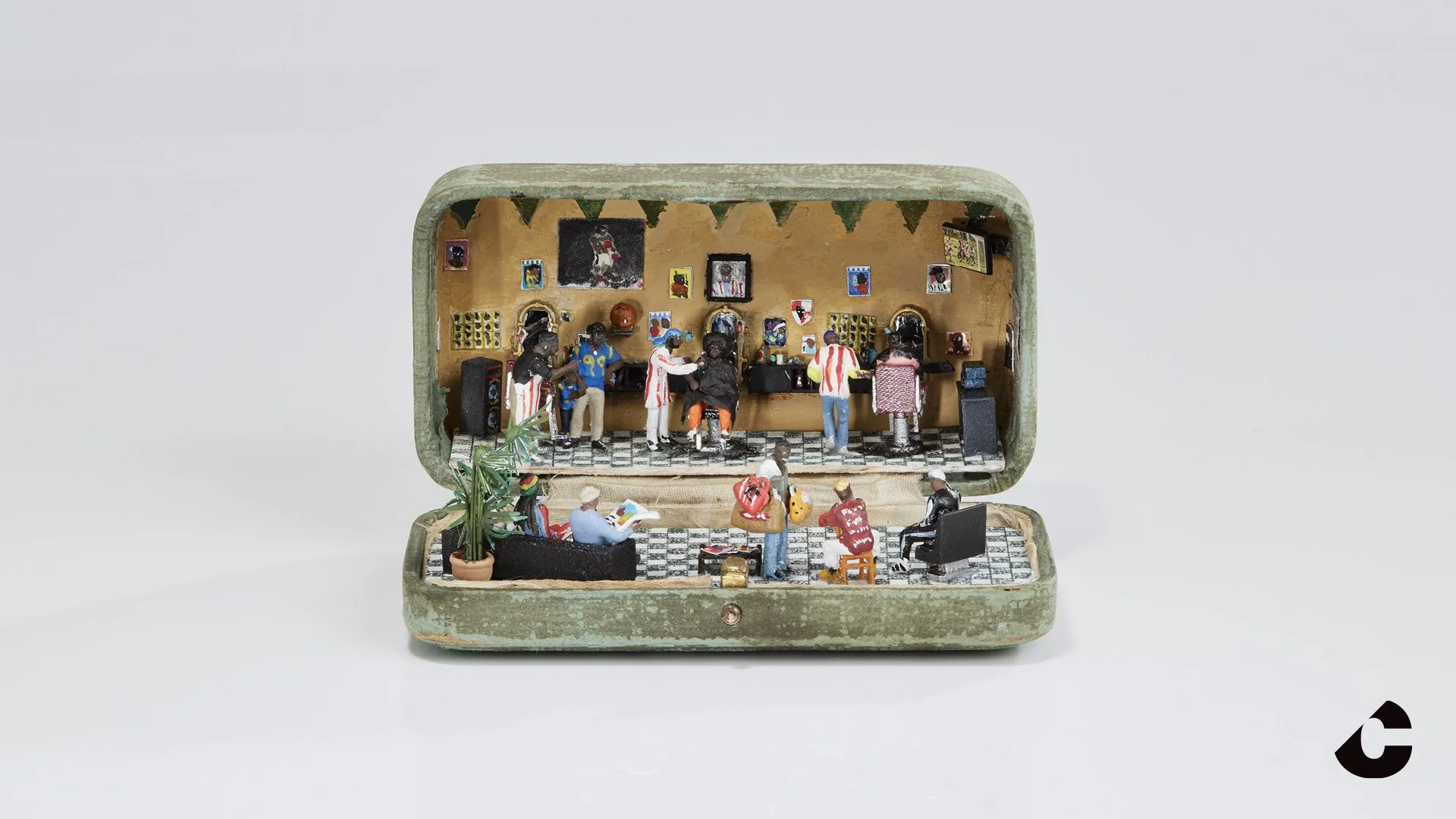
Curtis Talwst Santiago. A lineup for lineups must be Friday. Always that one barber on the damn phone! Bruh, can you please finish my fade!?, 2022
Curtis Talwst Santiago
worlds, worlds, worlds
September 17, 2026—January 3, 2027
Flanagan Family Gallery
worlds, worlds, worlds explores how stories are held and carried across the vestiges of history and memory. Rooted in a form of world-building where inherited imagination meets critical fabulation¹, the exhibition celebrates polyphonic identities that negotiate different geographies across time, weaving the material, the fragmentary, and the ever-evolving within storytelling.
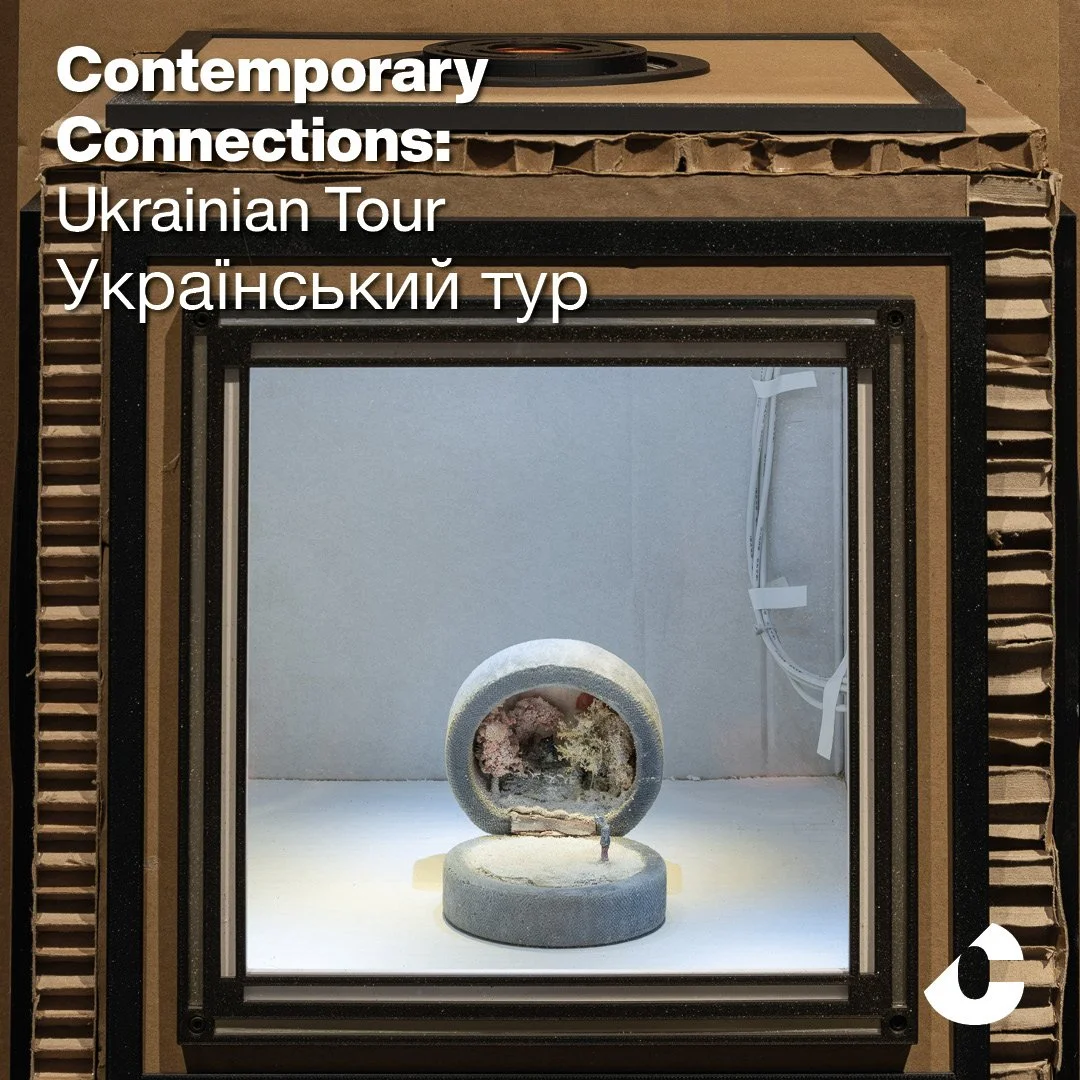
Central to the Contemporary Calgary presentation is a focused survey of Santiago's dioramas. Begun in 2008 and collectively known as the Infinity Series, these intimate works move fluidly between personal memories of Caribbean community life: basement dance parties, the quintessential barbershop, figures dreaming in the grass, and broader collective histories such as migration crises and the rise of territorialism in its many forms. These scenes are portrayed as something precious and deliberately sheltered, worlds that can be held in the palm of a hand, inviting careful observation of details often overlooked.
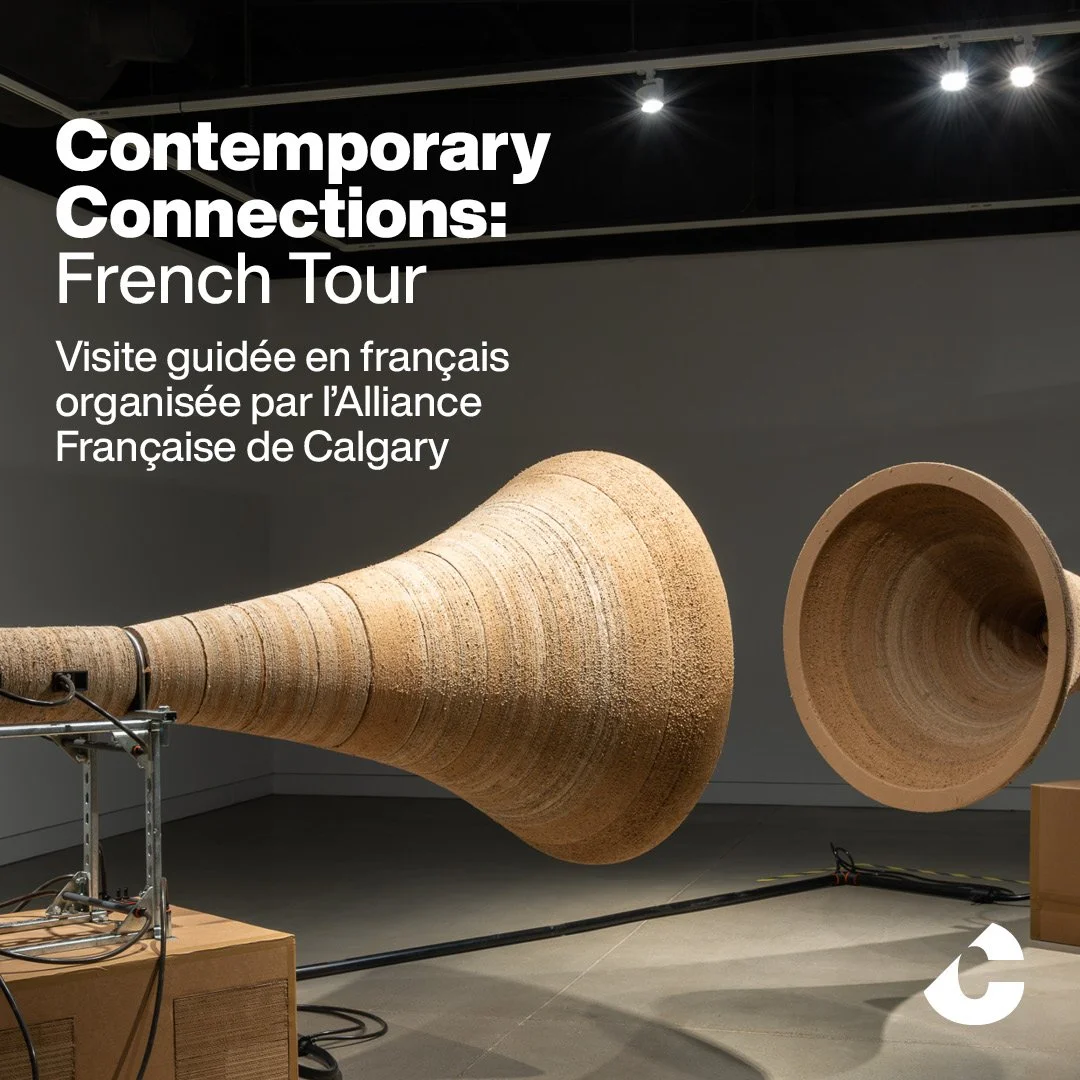
The dioramas are imagined within a scenography of transmission devices comprising horns, pipes, channels, and circuitry. Formed into sinuous volumes, these structures situate the exhibition across broader infrastructures of digital networks, material circulation, and regimes of surveillance capitalism², unfolding as an operative field in which meaning is generated, disrupted, and redirected. Together, they echo longer histories of movement, extraction, and displacement that continue to underwrite contemporary systems of connectivity and control. Made from cardboard, the material language extends Santiago's practice of crafting contained worlds like the jewellery boxes used to hold what is deemed precious before themselves being cast aside. That logic of containment and disposal is activated anew here. Cardboard, typically used to transport and protect objects prior to discard, becomes both vessel and structure, foregrounding the uneven politics of what is preserved, circulated, or rendered disposable. This transference of weight reflects the asymmetries of systemic power and selective memory, where what is amplified is not always what is most necessary to hear or remember.
With its visible strata and fragile edges, cardboard retains the imprint of pressure and time, operating simultaneously as surface, structure, and record. This textural sensibility resonates with Santiago's practice as a musician, where attention to rhythm, resonance, and disruption extends into the visual field. Horns and channels recur as devices that broadcast and carry messages, except here they appear to modulate our attention. In this expanded field, perception is not anchored in the visual alone; it is distributed across minor frequencies, subtle registers, and peripheral cues that ask to be heard as much as seen.
This exhibition is especially timely within the North American context, a land shaped by the encounters of peoples from the old and new worlds, where histories, stories, and identities are constantly intersecting and evolving. The condition of partial relay runs throughout, meaning formed through relation, interruption, and circulation. Rather than emerging as fixed or complete, stories unfold through fragments, detours, and acts of exchange, revealing how worlds are continually assembled through encounters with others.
At a moment when cultural gatekeeping, rigid hierarchies of knowledge, and fear of difference continue to structure public discourse, worlds, worlds, worlds affirms curiosity, exchange, and the will to community as practices of repair and collective imagining.
Curated by Kanika Anand.
Notes:
Saidiya Hartman, “Venus in Two Acts,” Small Axe: A Caribbean Journal of Criticism 12, no. 2 (June 2008): 1–14. Hartman introduces the term “critical fabulation” in relation to the gaps and silences of the historical archive.
Shoshana Zuboff, The Age of Surveillance Capitalism: The Fight for a Human Future at the New Frontier of Power (New York: PublicAffairs, 2019).
Upcoming Programs
Program Archive

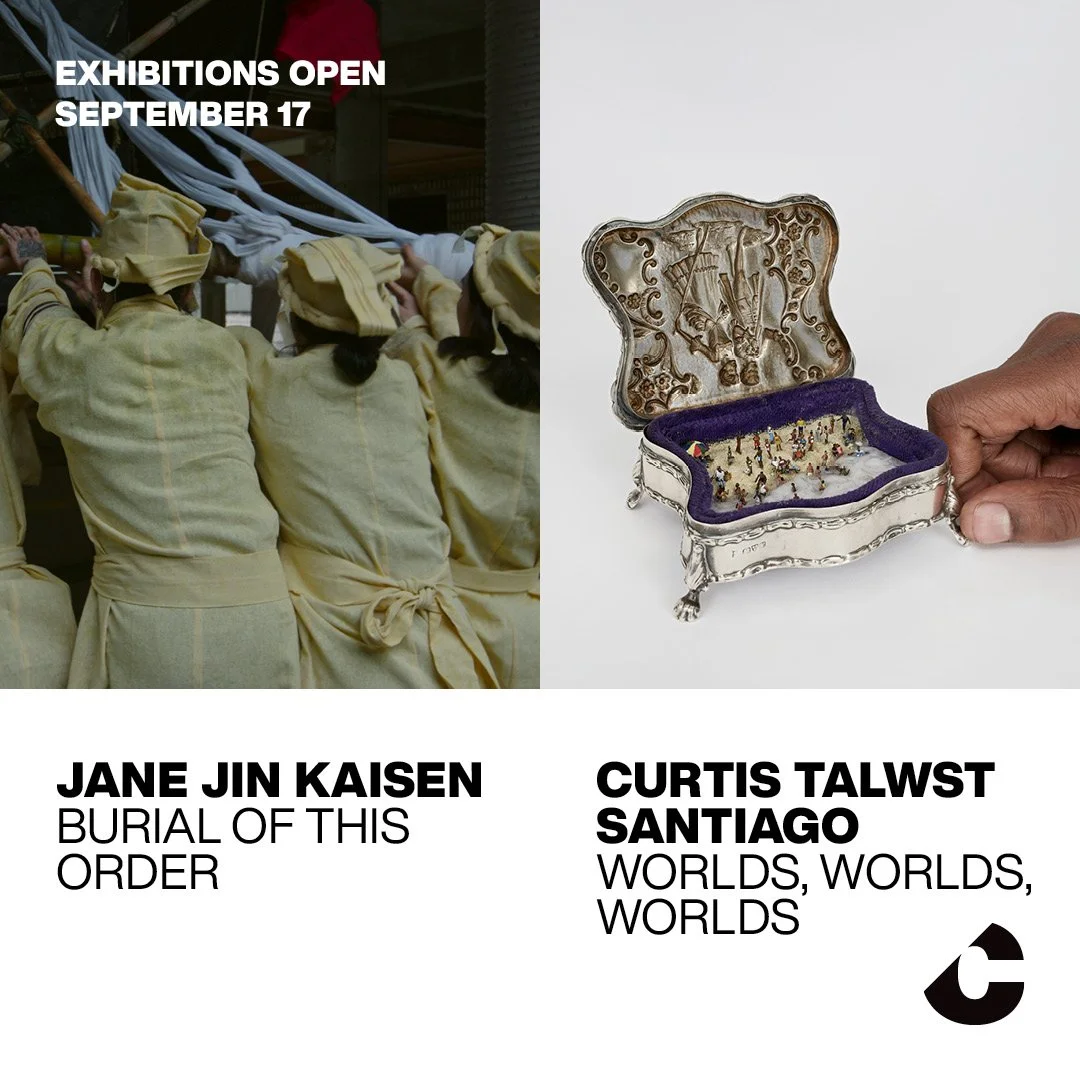
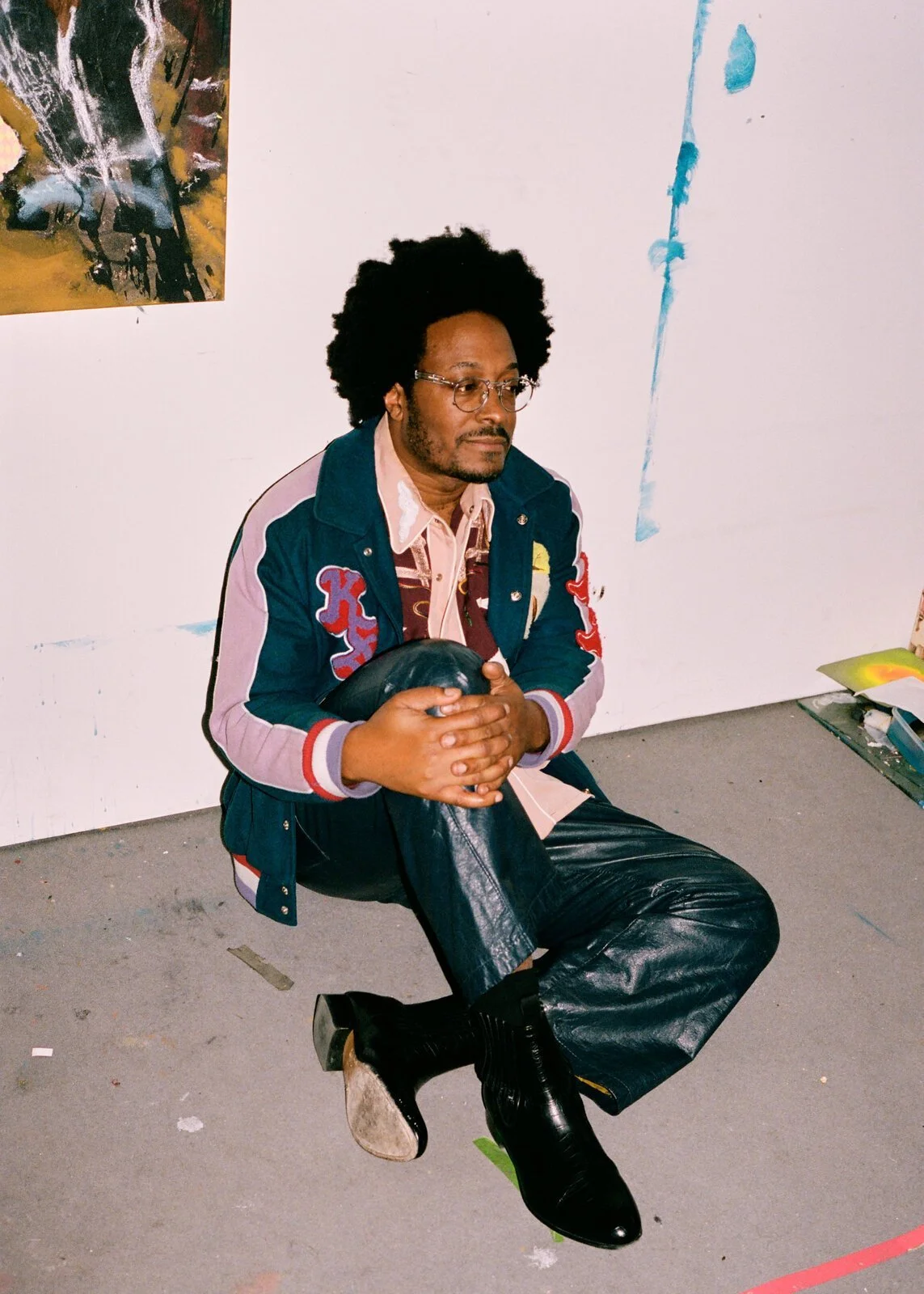
Photo by: Conrad Mirbach
About the Artist
Curtis Talwst Santiago (he/him)
Curtis Talwst Santiago puts entire worlds inside jewellery boxes. The dioramas, intricate handbuilt scenes no larger than a palm, are where his practice began and where it remains anchored, even as it has expanded into painting, sculpture, public art, and film.
Santiago was born in Edmonton and raised in Sherwood Park, Alberta, to Trinidadian immigrant parents. He grew up between two worlds, Caribbean household, Canadian suburb, and that double consciousness never left him. It shows up in the work: a barbershop scene beside a migration crisis, a basement dance party next to a border. Nothing in the Infinity Series stays safely in one world for long.
He came up through music. As a teenager he performed in an a cappella group, opened for Usher by 18, and earned a CBC Star Maker award at 23 before co-founding the funk band HI PHONIQS. His most recent solo full-length was recorded with Grammy Award winning producer Illangelo. Visual art eventually took over, but the musical foundation never disappeared, rhythm, resonance, and interruption run through everything he makes.
Art had always been there, in Vancouver it just took over. Friends who saw the work convinced him it belonged in galleries and museums, and he started to believe them. A flea market street vendor handed him his first ring box, setting the Infinity Series in motion. A knock on the right studio door led to a three-year mentorship with renowned First Nations artist Lawrence Paul Yuxweluptun. He later moved to New York, where a solo exhibition at the Drawing Center marked his arrival on the international stage.
His work is held in permanent collections including the National Gallery of Canada, the Studio Museum in Harlem, and the Lenbachhaus Munich. He is represented by Uffner & Liu, New York, and Martina Simeti, Milan, and lives and works in Potsdam, Germany.